
Research lines
Research
Current research areas in complex systems and network science.
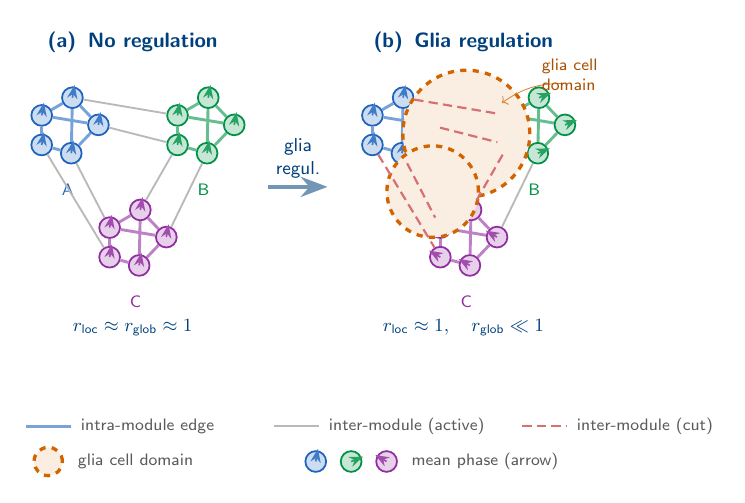
Neuroscience
We model glial cells as inhibitory regulators in modular neuronal networks. This mechanism preserves local synchronization while suppressing the pathological emergence of global synchronization.
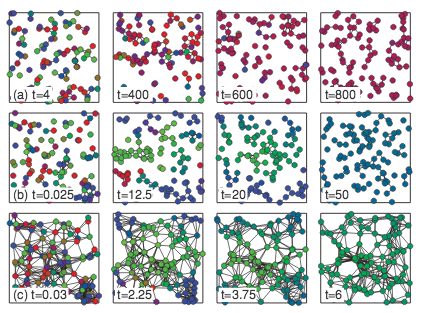
Synchronization in complex networks
We study how network topology, community structure, oscillator diversity and mobility, among other factors, shape synchronization in complex systems. Our work connects structural organization with the emergence of local and global collective dynamics.
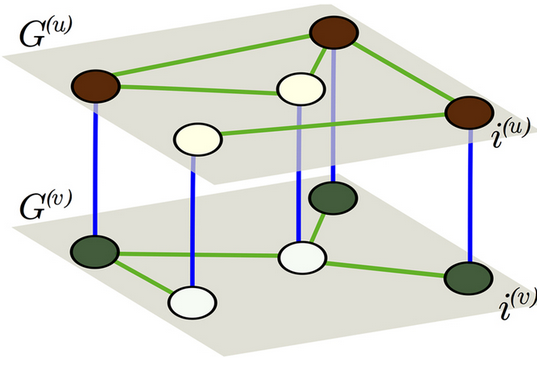
Multiplex networks
We study complex systems formed by multiple interconnected network layers. Our work shows how interactions across layers reshape diffusion, collective dynamics and systemic robustness.
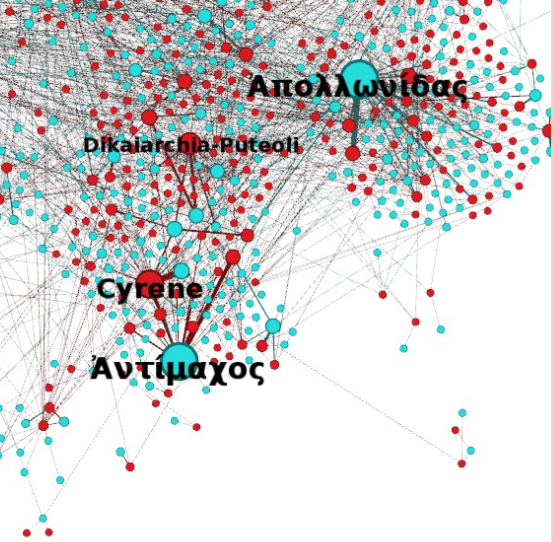
Production and Distribution of Food during the Roman Empire
We use network science to investigate production and trade during the Roman Empire. By combining historical and archaeological evidence with quantitative models, we explore the organization and evolution of ancient commercial systems.
Social networks
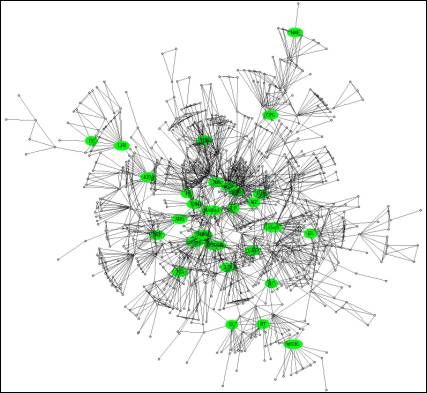
We analyse communication, collaboration and trust networks in different social contexts. Our research focuses on their structure, communities and the mechanisms behind the formation of social capital.
Mobility
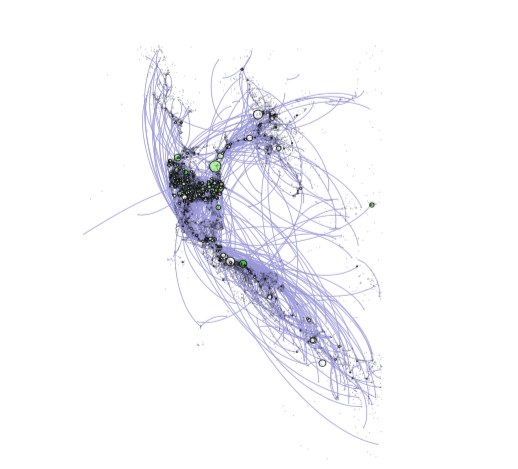
We develop network and statistical-physics approaches to understand human mobility. Large-scale movement data allow us to identify recurrent patterns and connect individual trajectories with collective behaviour.
Statistical mechanics of multiedge networks
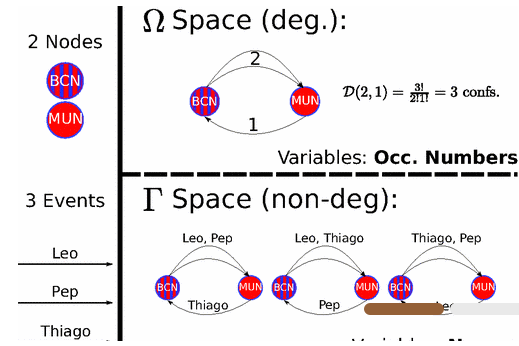
We develop a statistical-mechanics framework for networks with multiple distinguishable connections between the same nodes. This approach clarifies how discrete interaction events generate weighted structures and their observable properties.